Been a while since I’ve posted anything here, but figured I’d at least mention that I’ve been with Mozilla for the past year or so, leading their New Products organization. We’re working on a lot of promising new stuff!
-
This past Friday was my last day with Betaworks Ventures. It’s been just over six years since John Borthwick and Matt Hartman asked me to be the third partner in a new fund they were creating out of Betaworks, and saying yes to that was one of the best decisions I’ve ever made. I’ve loved working as an investor, but it felt like it was time for a new challenge and so a few weeks ago I let them know that I would be moving on.
I’m really proud of what we’ve accomplished with Betaworks Ventures. The partnership I’ve had with John and Matt has been one of the most intellectually engaging of my career and I’ll miss digging into deals with them and the team and debating what technologies are going to shape the future of how we live, work, and play online. I’m especially grateful for their friendship. John has been a trusted confidant and mentor for almost twenty years now (the story of how we met is worth reading — it involves us being booed on stage) and it’s hard to overstate the impact he’s had on my career. I didn’t know Matt as well before I joined Betaworks, but I immediately loved working with him, he’s one of the smartest and most decent persons I know and I feel truly lucky to have gotten to spend so much time with him over these past few years.
There were so many other people from Betaworks, past and present, that I was so fortunate to work with that I’d like to thank, including Danika Laszuk (who I’d been trying for years to find a way to work with), Jon Chin, Julie Zhang, Nicole Ranucci, Josh Auerbach, Sam Mandel, Analisa Svehaug, Michelle Sommerfeldt, Ben Scheim, Jared Newman, Tyler Becker, Kit Irwin, Fahim Abouelfadl, Soren Wrenn, Patrick Montague, Ana Rosenstein, James Cooper, Dennis Cheng, Sarah McBride, Tommy Sullivan, and Kerri Donnelly. You all made my time at Betaworks so amazing. I’m sad to be leaving without having been able to see any of you in person for the past year and half since Covid put an end to my regular trips out to the New York office. I’ll miss our games of Werewolf at Betaworks Studios!
I’d also like to thank all of the founders I was able to work with. I can’t believe how many incredibly talented people I got to spend time with as part of my job and I’m honored to have been a small part of your journey. I’m still here if there’s anything you need!
I don’t have anything to announce about my future plans right now, apart from that I’ll be taking some long overdue time off, but if you’d like to stay in touch I’m easy to find.
-

Despite my hesitation to commit to new projects at the moment, I’ve launched a new newsletter on social gaming called Metaplay. You can subscribe here if you’re interested.
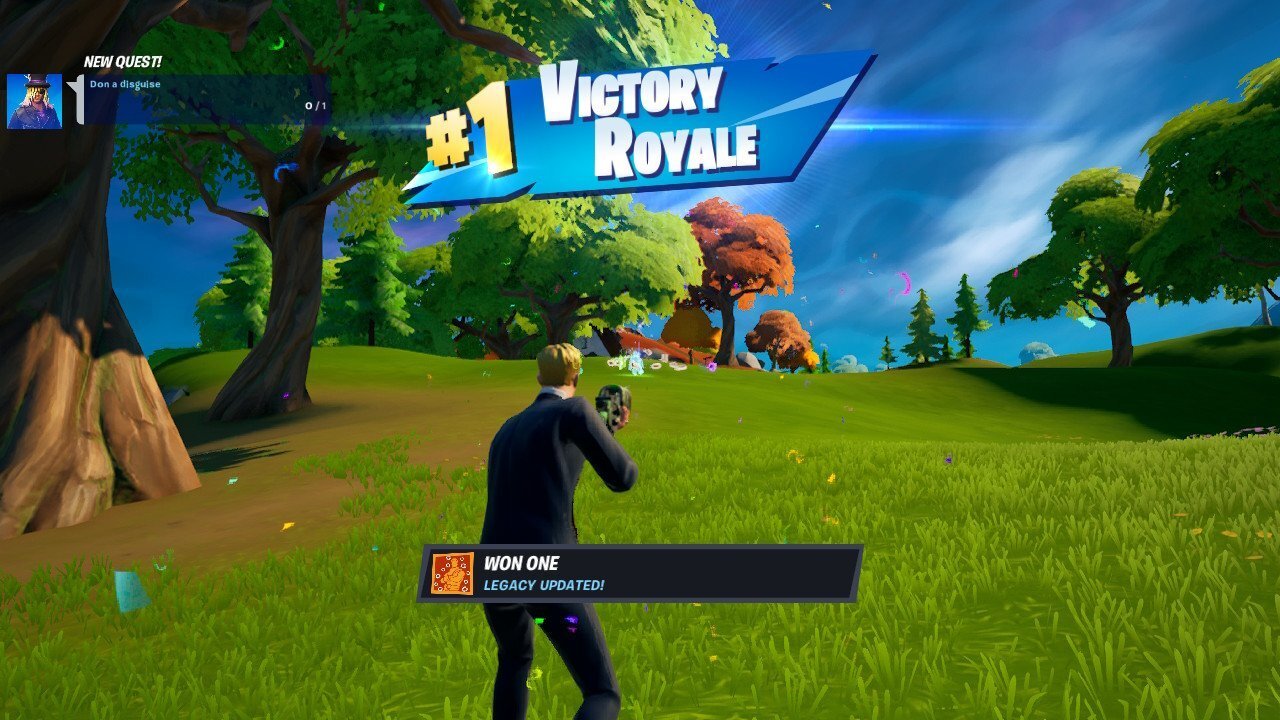
My goal with this newsletter is to share semi-regular updates offering a mix of commentary and analysis, links, suggestions of new games to check out, the occasional interview, and screenshots of my latest Fortnite wins. To be honest I’ve been a bit overwhelmed by the initial response to the announcement and my hope is that you’ll find reading this to be useful and worth your time.
So why a newsletter on social gaming and why now? Because social is eating gaming. Even though online multiplayer gaming has been around since forever, there’s something that feels different and new about what’s happening right now. Games are becoming more like places we go to spend time with our friends, not just things we do to be less bored. A year into Covid we’ve all seen now how valuable playing videogames together can be, not just as a form of entertainment when we’re stuck at home, but as a way to foster, deepen, and maintain friendships during a time when few of us, especially kids, have had the opportunity to do much of that stuff in-person.
I wrote about why games can work so well as social experiences a few months ago and won’t repeat everything I wrote here, but there a couple of key points about how social games served a crucial function during a critical time that are worth reiterating:
-
What social games are able to do (and which virtual worlds that aren’t games largely fail at) is to replace the anxiety of unstructured and unbounded social interactions with a highly structured scenario in which we literally have something to do and rules for how we do it.
-
Social games provide a space for what are often considered to be the four key elements needed for friendships to develop: Proximity, Frequency, Duration, and Intensity.
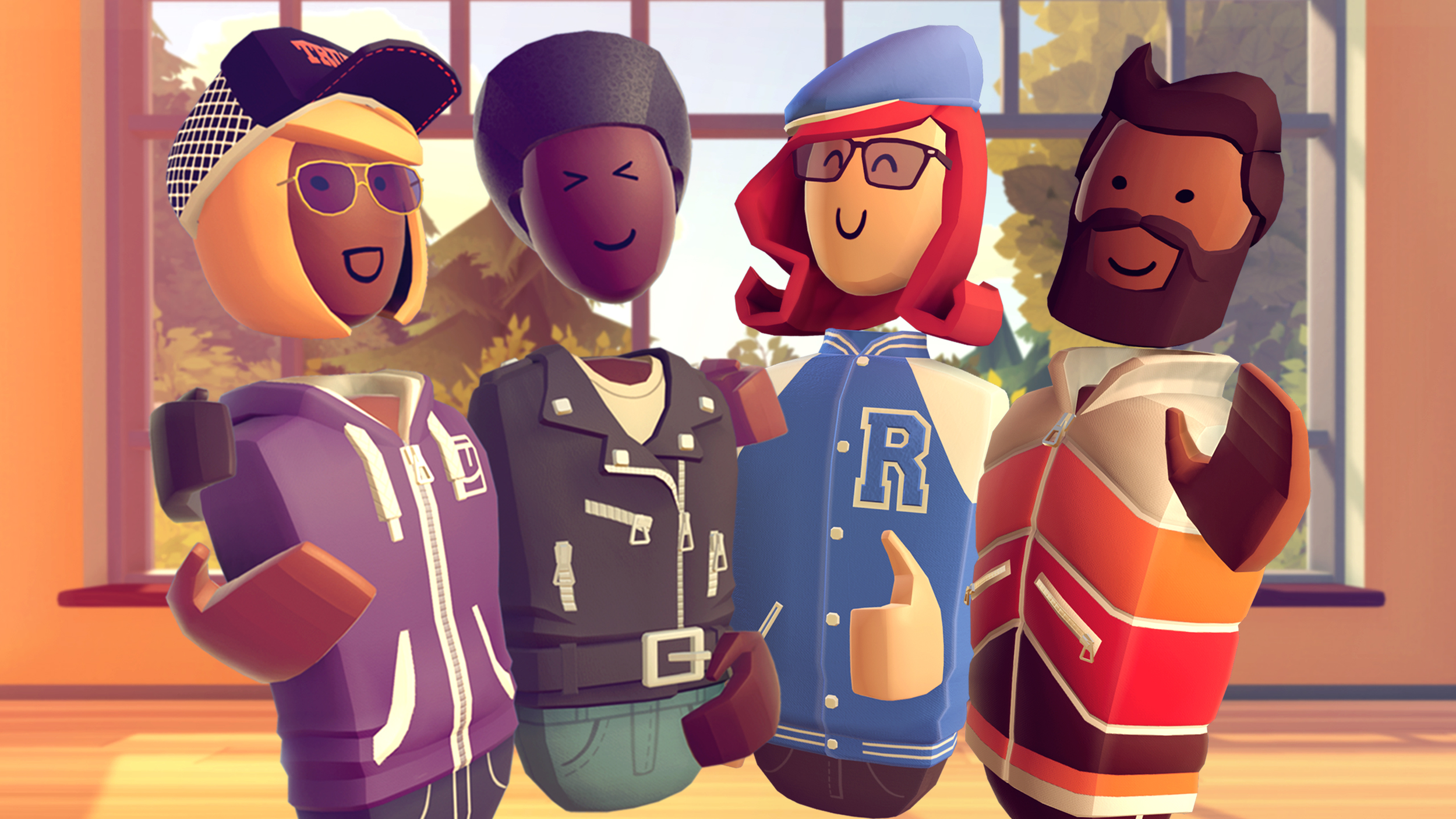
It’s not surprising that games that provide structure to our social interactions and satisfy these four key elements of friendship (like Roblox, Fortnite, Minecraft, Rec Room, Animal Crossing, etc) have exploded in popularity during a time when we couldn’t see our friends IRL. Social gaming was already growing pre-Covid, so even if patterns of usage shift as we start to go back to our normal lives, I’m convinced that games will remain a primary place where a lot of us socialize with our friends from here on out.
-
-
I’ve been wondering if remote-first companies could use a video game that employees play together as a way to facilitate the kind of relationship building and culture development that can be tough to create when everyone’s not in an office together. A lot of businesses had to transition to remote work this past year and while post-Covid most people will likely return to in-person work, we are clearly moving towards more remote-first and hybrid workforces.
Could a workgame help a remote-first company recreate some of the social elements and serendipitous moments that are lost when you don’t have everyone together in the same place? Is this even possible? I don’t know the answer, but I have some thoughts on what a workgame might look like.
For starters, I’ve been thinking a lot about how video games can help us create and maintain friendships since that thread I posted a couple months back on social games and am curious whether a workgame could be designed to solve these gaps for remote-first and hybrid teams.
What I’m not talking about:
-
Turning work into a game or adding gamified elements like achievements or streaks to work
-
2D or 3D virtual workspaces. Apps like Teooh and Gather are definitely useful for virtual events and meetings, but they are intentionally not games.
-
Video conference calls with party games or icebreakers, though these can definitely be fun and helpful.
No, what I mean is an multiplayer online game that employees play that functions as a space where people can spend time together, with the structure and fun of a game facilitating and underpinning those interactions.
There has been a small trend this past year of people playing video games together socially as part of their work, whether it’s for networking, sales, team standups, etc. The New York Times wrote about this last year and I’ve been doing my fair share of this myself over Fortnite. It turns out that playing social games for work isn’t all that different from stuff we did IRL pre-pandemic, like going out to lunch, playing golf, or going out for drinks after work. It’s just that Covid forced a lot of us to look for online alternatives to what we did before — and in the process we discovered that games could work surprisingly well for fostering relationships!
While there has been plenty of activity like this, what I haven’t seen yet is anyone (at least that isn’t still just a tiny startup) using gaming to try to accomplish this sort of relationship building across an entire company.
So what could a workgame look like? To be honest, I don’t exactly know, but here are some features I think it might have:
-
First, the game needs to be fun to play and as immersive and engaging as GTA, Fortnite, or Minecraft. This is no small feat, but if the game feels like it’s just another part of the job it will defeat the purpose of having it in the first place. (Sure, work meetings can — and probably should! — take place within the game, but it’s primarily meant to be a space for creating social connections within the workplace, not a job in and of itself.)
-
Second, following from that, to encourage interactions the game needs to have a collaborative element or something about it that brings players together or gives them reasons to engage with each other (like a virtual economy or quest/tasks that need to be completed together).
-
Third, while the game needs to be fun, it can’t overwhelm the work itself. That means no grinding or anything else that encourages people to spend time trying to level up in isolation rather than interact with other players.
-
Fourth, the game needs to be easy to pick up; starting needs to be simple enough for new employees to dive in. And if you want to drive more interaction you can design the game so that new players advance by learning elements of how the game really works from older players.
-
Fifth, it needs to be a persistent gaming space or universe, one where team members can log in and expect to find others there already.
-
Sixth, the game will have to appeal to pretty much everyone, since the point is to be inclusive and bring people together. This is probably the hardest part to pull off, since there are plenty of people who aren’t interested in playing any game of any kind. (Something like Animal Crossing or Minecraft might have broad enough appeal, though personally I’d love to see someone create an MMORPG for companies.)
-
Seventh, each company needs to be able to have its own game world and the game likely needs to be customizable in different ways to suit their needs. Plus bigger companies will likely want different features than smaller ones.
-
Eighth, there needs to be single sign-on and other enterprise-level security and account management tools right from the start. Companies expect this stuff from day one now.
All of this is a tall order, and I’m sure there are other critical features I’m not thinking of, but as challenging as it would be to create something like this, the potential benefits are enormous. While the percentage of people remotely is going to decrease after the pandemic ends, a lot of companies are going to stay remote-first or hybrid going forward and the need for tools that can foster the right kind of company culture and team interactions is going to be huge
Anyway, I would love to hear what others think about this, if anyone is experimenting with games at their company, or if you’re building a workgame. You can hit me up here.
(And yes, I know that Slack started out as a game!)
-
-

Last week Nintendo published new usage guidelines for Animal Crossing that make it expressly clear that you cannot use the game for commercial purposes, including marketing your business, selling custom designs, or earning ad revenue with game content. I can understand why Nintendo wants to prevent the game from becoming spammy or overly commercialized, but also feels like there is a missed opportunity for them to catalyze some sort of economy around virtual goods. Plenty of Animal Crossing players are interested in paying for stuff to enhance their gaming experience. To satisfy that demand a number of third-party sites like Nookazon have cropped up where they can go to buy furniture, clothes, art, etc. Fashion brands are experimenting with bringing virtual clothes to the game as well.
It’s not surprising that Nintendo is being conservative about Animal Crossing going in this direction. They have tended to be relatively cautious about stuff that is outside of what they know well — and they are the best at what they know well! It’s entirely possible that they’ve issued these rules while they try and figure out how to best to allow people to buy and sell within the game. But in all likelihood this is more or less going to be the policy around commercial activity in the game going forward.
Eventually someone else will likely step into the gap Nintendo has opened up here and create a game that’s a lot like Animal Crossing, but that embraces the virtual economy and encourages, rather than discourages, creators, brands, sellers, etc to participate. This will be harder than it looks, of course, as it’s easier to add a virtual economy to a fun game than to add a fun game to a virtual economy, but I’m excited to see what ends up getting built here, and if you’re working on something along those lines, I’d love to hear from you.
-
A version of this first was posted as a thread on Twitter.
Social gaming has exploded this year, which isn’t surprising given how many people have been stuck at home due to the pandemic. I know for me it’s been a great way to stay in touch with friends. But why do games work so well as social experiences? I have a few thoughts on this.
First, the numbers for social gaming have been staggering. Roblox did 150M MAUs in July, Minecraft hit 131M in Oct. Nintendo has sold over 22M copies of Animal Crossing. Fortnite crossed 350M reg users. Among Us has seen more than 100M downloads and nearly 4M peak concurrent players. Social games were already becoming an enormous part of our lives, and Covid-19 just accelerated that trend.
Why have social games proven to be so good at maintaining friendships during this time? Because the prospect of doing something fun together draws us in, while the structured play of the game organizes and facilitates our social interactions. This is because all games, whether they’re video games, board games, or sporting games, are by definition constructed situations with conventions for how to interact that sit apart from regular life.
What social games are able to do (and which virtual worlds that aren’t games largely fail at) is to replace the anxiety of unstructured and unbounded social interactions with a highly structured scenario in which we literally have something to do and rules for how we do it. The game sets the stage for our interactions with others. When you play a social game there’s typically no uncertainty about what you’re doing in that shared space and there are rules to how you should interact. The game helps facilitate the act of being friends, so to speak. This isn’t to say that abuse isn’t a problem in online gaming — it absolutely is. Every social game needs to very actively address this. And as social games become a primary place where many of us do our socializing it is critical that they be welcome spaces for everyone.
Social games work because they provide a space for what are often considered to be the four key elements needed for friendships to develop: Proximity, Frequency, Duration, and Intensity. Proximity makes it easier to see your friends and spend time with them. In real life friends tend to live close to each other, go to the same school, or work at the same place. Social games reproduce that proximity online, creating a space for people to engage with each other.
But proximity is not enough on its own. Friendship also needs both frequency and duration of interaction. It’s tough to make a new friend or stay close with an old one if you only see or speak with them once or twice a year (which I can tell you as a 45-year-old, is something that can all too easily be the case as you start to get busy with your job and family). Social gaming can make it easier to increase both the frequency with which you interact with your friends (by offering an excuse to get together on a regular basis) and the duration of those interactions (because the games are fun to play it’s easy to pass time quickly).
Gaming also can offer a key element of intensity to those relationships. Playing games together creates shared emotional moments, whether that’s a Victory Royale with your Squad in Fortnite or figuring out who the imposter is in Among Us. It’s not just that playing a game together online gives people a space to chat about their lives. It’s also how the gameplay itself offers a mechanism for people to engage with one another in ways that they wouldn’t have otherwise. When you play a game with someone, you have a shared goal. You have a shared sense of purpose. You have a shared emotional investment in the outcome of the game. You have a shared emotional investment in the other players. What gaming provides is a safe framework for inducing emotional intimacy that mirrors the emotional intensity of the games that are being played. Without games we often don’t have a structure for safely experiencing those kinds of emotions with others in our daily life.
It’s also why “playing” often isn’t the only thing happening in these games now. We’re holding graduations in Minecraft, birthday parties in Animal Crossing, getting married in Rec Room, and watching movies together in Fortnite. Social games can help foster and strengthen our relationships so that we can have these kinds of experiences within the space of the game. None of this would be happening if the underlying games themselves weren’t fun to play — we need the magnet of compelling gameplay to draw us in — but it turns out that the interactions that social games catalyze with our friends are often what we truly value.
-
This was originally posted as Twitter thread.
Are there any good tools for groups that want to do world-building for fictional settings together? I mean stuff like lore, maps, timelines, etc for fantasy & sci-fi settings. Because if there isn’t I want to help get it built.
I’ve been writing a D&D campaign with my son and part of what has been so much fun about it is the world-building we’re doing: creating the setting for the campaign, maps, backstories for characters, the history of the area, mythology, etc. It hasn’t been so hard to keep track of all that as it’s just the two of us. But I’ve been wondering: How would you do this with a larger group? Could you make this kind of world-building a more collaborative process and still have it work?
There has been a shift in media away from series that offer installments of a single story and towards Creative Universes that serve as more open-ended settings for a potentially limitless number of movies, TV, books, games, etc. (Star Wars is the best example of this shift; my good friends Matthew Ball and Jonathan Glick wrote about how these Creative Universes are the future of media earlier this year.)
Big media companies clearly see the value in extending successful IP franchises into Creative Universes, esp. because of how invested in them fans can become. You don’t just sell tickets to a movie, you get those fans excited about an entire universe of content. But for the most part our participation in Creative Universes is limited to consuming media (or at best being players in games in those settings) or bending copyright and writing stuff like fanfiction. This can be frustrating because many of us love stuff like Star Wars and Lord of the Rings not just because of the dramatic narratives, but also because of how detailed those Creative Universes are. We love the maps and the lore and the mythology. (Tolkien supposedly wrote the LotR books in part because he wanted to do something with the Elvish language he’d invented and the fantasy setting of Middle-Earth that he’d created.)
So back to that D&D campaign I’m working on. What if there were a tool for groups to do this world-building together, with the goal of it being an ever-evolving reference and structure for narratives and/or games set in that Creative Universe? I bet there are people like me who might not ever write a fantasy novel, but who would enjoy nerding out on creating a pantheon of gods, drawing maps, inventing languages, conceptualizing new technologies, or a designing system of magic.
There are wikis, of course, but as far as I can tell there isn’t anything purpose-built for this and the needs of being able to define & create timelines, maps, histories, major figures, mythologies etc and keep everyone on the same page as to what’s canon and what’s not. This tool could be a way to build and expand that setting over time, complete with permissioning and versioning. (And maybe even a way to fork settings into parallel universes?)
Use-cases could range from small groups using it to keep track of what’s “in-universe” for their own creative projects (or to license the IP out), to entire fan communities building Shared Creative Universes together in a more open collaborative process. (GitHub for SCUs?)
You could imagine the author of a book series deciding to “donate” their setting to their fan community, using a tool like this to maintain structure while opening up to contributions. Maybe there even needs to be a set of Creative Commons-like licenses for these cases?
All of this is especially important because we are devoting more of our time and attention to these Creative Universes, whether it’s through the games we play, the movies we watch, or the books we read. More of us should be able to participate in that world-building, esp since the ideas and concepts that we contribute to these Shared Creative Universes are a form of creative expression in and of itself. You might not direct a movie or build a game, but you could have a hand in crafting the world that a movie or game is set in.
So I’m thinking about how to help make this happen. I’m not sure this is a startup (and I am not thinking of starting one to do this), but the idea has been rattling around in my head for a while and I finally decided to see if anyone else thinks this is interesting. I’d love to know if this idea resonates with other people. If you’re already working on something like this, might want to contribute to building these tools, or just have some ideas about Shared Creative Universes, please get in touch!
-
Some news: I have a new podcast.
I love gadgets (you know this) and I love history podcasts (you may also know this), but it never occurred to me to combine the two. That is until I became friends with Christie Pitts. I first met Christie, who is a partner at Backstage Capital, at a VC dinner a couple of years ago, and instead of talking deals, we ended up nerding out and talking about old smartphones for most of the evening. Turns our Christie started her career selling phones at a Verizon store in the mid-2000’s, which is right around the time I was spoiling consumer electronics company product launches at Gizmodo and then Engadget.
We had so much fun talking about the early days of smartphones whenever we’d meet that one of us (can’t remember who) pointed out our conversations would make for a great podcast. So 0G: A History of Forgotten Phones was born. 0G is a limited-run podcast where we look back at how weird and wonderful smartphones were back in the days before iOS and Android took over and your only option became a rectangular slab running one or the other.
We’ve recorded seven episodes so far, kicking things off in our first episode with a look back at the smartphones of 2002, 2003 and 2004. I hope you’ll check it out. If you lived through those years you’ll get a kick out of revisiting that time, and if you’re too young to have experienced it first-hand hopefully it’ll be an entertaining look back at how wild mobile was back in the day!
You can find 0G wherever you listen to podcasts:
-
For the past couple of years we’ve been doing Betaworks Camps, a program for startups building in emerging categories. Founders work out of our offices in NYC for 3 months & @betaworksVC makes an investment. Each has a theme, next one we’re doing is around “Synthetic Reality”.
Unlike Camps we’ve done in the past (which had themes like AR and voice-computing), Synthetic Reality is still very early not as well-defined. But what we’re talking about are new technologies that are blurring the boundaries between what is real and what is synthetic.
There are a few different aspects of Synthetic Reality we’re interested in. There’s synthetic media, where powerful new tools for creating highly-realistic computer-generated imagery are increasingly accessible to anyone with a decent laptop or smartphone. Synthetic media will be to CGI what social media was to publishing. Driving this are huge advances in motion capture, pose estimation, 3D graphics software, and GPUs.
Another part of synthetic media is algorithmically-generated content, which often uses tools like generative adversarial networks to create, enhance, or edit media far more efficiently than could be done by humans. We’d also put news articles “written” by AI in this category.
Related to all this is the new world of digital avatars and virtual celebrities/influencers that use these tools. Lil Miquela is an obvious reference point, but we’re also fascinated by avatars more generally and new kinds of social products that are being built around those.
Like a lot of people we’re also concerned about DeepFakes and content that’s been manipulated for the express purpose of deceiving people. We believe the need for software-based tools for detecting fakes is going to grow exponentially.
What kinds of startups do we want for Synthetic Camp? We want anyone building deep tech for enabling synthetic reality; consumer-facing applications for creating and/or distributing synthetic media; avatar-based social products; anything related to virtual celebrities/influencers; platforms for distributing/sharing synthetic media; and software tools for detecting fakes or otherwise altered content and media.
Synthetic Camp is for both pre-seed & seed stage startups. @betaworksVC will invest $200K into each participant. The program kicks off in February in NYC. It’s an oppt. to work closely with us & a bunch of other startups all trying to define the future of a new category. 10/X
Want to apply? Go HERE.
Any questions? Email me HERE.
-
I’ve been doing open office hours off and on for the past few years, both in person and over Skype, but last month I decided to try something different and experiment with holding office hours over Telegram. There is clearly lots of value to doing these kinds of meetings in person or via video chat, but I thought holding the conversations over text messaging could offer a low pressure, more casual way for people to pitch me their startup, get feedback on their ideas, ask for advice on a product or career challenge, etc. I’ve become a big fan of Telegram over the past couple of years and have shifted a lot of my professional and personal messaging to the platform, so it seemed natural to try this there.
My hope was that by making it easier to have a conversation that those who might find jumping on a Skype call with a stranger a little intimidating would feel more comfortable reaching out. I also thought it might be an easier format for those who aren’t native English speaker. It probably wouldn’t hurt that because everything would be conducted over text I’d probably be able to hold multiple conversations at the same time; it’d be a simple way to scale my availability since I’d be able to chat with more people during the same amount of time.
So I posted something on Twitter and on my blog asking if anyone would be interested in trying it out and received enough responses via email and DM that I decided to carve out a couple of hours on my calendar the following week for eight 15-minute sessions, with the expectation that sessions would likely run over and so some discussions would happen concurrently. (If you’re especially curious, I used Calendly for scheduling the sessions.)
Some takeaways:
- It was a more efficient use of time. Some people had a very specific ask of me and only needed to chat for a few minutes. For those requests scheduling a call or an in-person meeting would probably not have been the best use of time for either of us, especially since with chat it’s easier to get straight to the point. Trying to have that same conversation over email would likely have taken longer and required much more back and forth to get the same result.
- I was able to be more considerate in my responses. Doing the conversations over text message meant I could take time (although not too much time!) to think about my responses. When you’re speaking with someone in person or a call there is a lot of pressure to respond immediately to whatever they’re saying. Chatting over Telegram gave me a little bit of a buffer to consider my responses before offering them.
- Having overlapping chats worked, for the most part. Only a few people needed to chat for more than 15 minutes and I was able to handle two conversations simultaneously when I needed to. But I do need to work on being more responsive, one person told me that it was sometimes hard to tell if I was preparing to respond or waiting for them to respond. This is something that you don’t have to worry about with a meeting or call and I will have to be mindful of this next time around.
- There can be miscommunications/misunderstandings. One person explaining their business model to me kept writing “1.06%” when they meant “106%” and it took more than a few minutes to untangle what they meant. I suspect if we had been on the phone or in person it would have been easier to get clear up the confusion. Fortunately this was the only misunderstanding in the eight chat meetings I had that day, but having conversations entirely over text does risk some nuance being lost and it’s something else I am going to keep in mind going forward.
Will I do it again? Yes, absolutely. I had a bunch of great conversations and the flexibility of the format made it easy for me to find time for it. If you’re interested in signing up for a future Telegram office hours session let me know!